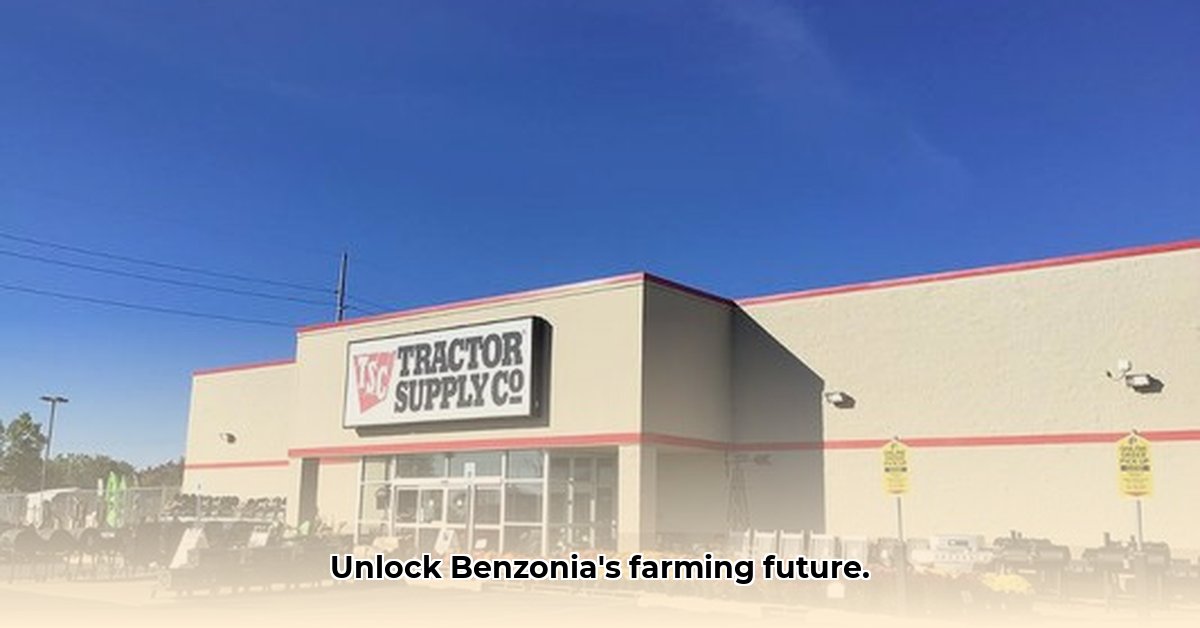
Tractor Supply Benzonia and Sustainable Agriculture: A Collaborative Opportunity
Tractor Supply Company (TSC) plays a vital role in supporting the agricultural community in Benzonia, Michigan. As a key supplier of farming equipment and supplies, TSC's potential contribution to sustainable agricultural practices in the region is significant. However, a comprehensive assessment requires detailed information on their current product offerings and sustainability initiatives within the Benzonia store. This analysis explores how TSC can better support sustainable farming, emphasizing actionable steps for farmers, TSC itself, and local stakeholders. For more information on TSC locations near Benzonia, see the nearby Tractor Supply stores.
Assessing Tractor Supply's Current Impact: Data Limitations and Opportunities
While TSC's overall contribution to Benzonia's agriculture is undeniable, quantifying its specific impact on sustainable farming practices proves challenging due to limited publicly available data on the Benzonia location's inventory. We lack specific details on the availability of organic seeds, water-efficient irrigation systems, or other products explicitly promoting sustainable agriculture. However, even without specific data, we can explore potential avenues for improvement. For instance, increased efficiency in tools and equipment, leading to reduced fuel consumption, can contribute indirectly to sustainable practices.
How can we better measure Tractor Supply's contribution to sustainable agriculture in Benzonia? This is a crucial question that requires further investigation and transparent reporting from the company.
Actionable Steps for Sustainable Farming in Benzonia
Realizing the full potential of sustainable farming in Benzonia necessitates a multi-pronged approach involving farmers, Tractor Supply, and local governing bodies.
For Farmers:
- Conduct a Product Inventory: Carefully assess the current product offerings at the Benzonia Tractor Supply, noting items that promote sustainable practices (e.g., organic seeds, water-efficient irrigation equipment).
- Prioritize Sustainable Choices: When purchasing supplies, actively select products from sustainable sources, looking for relevant certifications and labels.
- Seek Alternative Suppliers: If Tractor Supply lacks the necessary sustainable products, explore other local and regional suppliers specializing in sustainable agricultural goods.
For Tractor Supply:
- Understand Local Needs: Conduct thorough surveys and focus groups with Benzonia farmers to pinpoint their specific needs and challenges in adopting sustainable farming methods.
- Expand Sustainable Product Lines: Based on farmer feedback, expand the store's inventory to include a wider range of sustainable agriculture products (organic seeds, eco-friendly fertilizers, water-saving irrigation systems).
- Promote Transparency: Clearly label and promote all sustainable products, highlighting their environmental benefits and sustainable sourcing practices.
For Local Government and NGOs:
- Foster Collaboration: Facilitate partnerships between Tractor Supply, local farmers, and environmental organizations to launch initiatives supporting sustainable agriculture.
- Invest in Education: Develop and fund training workshops and educational programs to train farmers on sustainable agricultural techniques and best practices.
- Incentivize Sustainable Farming: Offer grants or subsidies to farmers who adopt sustainable practices and source supplies from Tractor Supply, helping them financially transition to more environmentally friendly approaches.
A Collaborative Path Forward: The Future of Sustainable Farming in Benzonia
While Tractor Supply's current contribution to sustainable farming in Benzonia is unclear without more data, its potential for positive change is significant. The key lies in fostering collaboration among all stakeholders. The success of sustainable agriculture in Benzonia depends on a shared commitment to environmentally responsible practices. Further research is needed to fully understand the current situation and create a more comprehensive strategy for the future. By working together, Benzonia can become a model for sustainable agricultural practices within the region.
What specific initiatives could be implemented to further support sustainable agriculture in Benzonia? This is an important question that requires the collaboration of various stakeholders.